Pre-Launch vs Ready-to-Move Apartments on the Dwarka Expressway 2026 — Which Should You Buy?
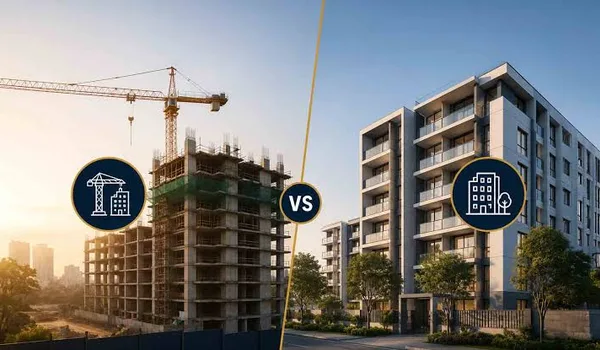
One of the first choices a homebuyer on the Dwarka Expressway faces in 2026 is whether to buy a pre-launch apartment at the lowest entry price and wait for it to be built, or a ready-to-move flat you can occupy right away. Both are valid; they simply suit different buyers. A pre-launch project like Prestige Meadows in Sector 92 opens at an indicative ₹1.11 crore, while a comparable ready flat on the same corridor typically costs more for the certainty of moving in now.
This guide compares the two options across the things that actually decide the call — price, GST, possession timing, payment structure, risk and appreciation — and ends with a simple view of who each one suits. The aim is a balanced picture, not a push either way.
What "Pre-Launch" and "Ready-to-Move" Actually Mean
A pre-launch apartment is sold before, or early in, construction — often during the Expression of Interest (EOI) or soft-launch window, sometimes before full RERA registration. You buy on the strength of the plan, the location and the developer's track record, and take possession years later.
A ready-to-move (RTM) apartment is a completed home with its occupation or completion certificate, available to occupy immediately. You see the exact unit, the finished building and the amenities before you pay in full. Between the two sits the under-construction stage, which shares the pre-launch trade-offs but with more of the building visible.
Price: The Core Trade-Off
Price is where the two differ most. Builders price a pre-launch at the lowest point to build early momentum, then raise it in stages through construction and after RERA and launch milestones. Enter early and you capture that lower base; the value can rise as the project is built.
A ready-to-move flat has already travelled that price curve, so it carries a premium for being finished and available. You pay more, but you pay for certainty — no waiting, no construction risk, and the flat you see is the flat you get.
GST: An Often-Missed Difference
Tax treatment can quietly narrow the price gap. An under-construction or pre-launch home may attract GST, while a ready home that already holds its completion or occupation certificate is generally outside GST. On a ₹1.11 crore flat, that difference is not trivial and should sit in your comparison, not be discovered later.
Because rates and rules change, confirm the current GST position for the specific unit with the developer before you compare the two options on price alone.
Possession Timeline and Rent Overlap
A ready home ends your wait immediately, which matters if you are paying rent or need to move for work or schooling. A pre-launch home means living elsewhere — and possibly paying both rent and pre-EMI — until possession, which on a fresh launch can be several years away.
For a pre-launch buy, read the committed possession date and the payment plan carefully, and check the construction status so the timeline is clear before you commit. If you cannot carry rent plus instalments comfortably, ready-to-move eases the cash-flow strain.
Payment Structure and Financing
The two options load your money differently. A pre-launch usually runs on a construction-linked plan — a small booking amount, then instalments tied to construction stages — which spreads the outflow and is gentler on cash flow. On the loan side you often pay pre-EMI (interest on the amount disbursed so far) until full disbursement.
A ready-to-move home needs the money now: your down payment plus full loan disbursement at registration, and the regular EMI starts straight away. For how the loan and EMI work on the same ₹1.11 crore flat, see the home loan & EMI guide. Either way, budget the stamp duty and registration from your own funds on top.
Risk and RERA Protection
The honest difference is certainty. A ready home carries almost no construction or delivery risk — it is built and certified. A pre-launch carries the risk of delay or of the finished product differing from what was shown, which is why the developer's track record matters so much.
RERA narrows this gap. A registered project must disclose its timeline, hold buyer funds in escrow for construction, and stand behind its commitments, giving pre-launch buyers real protection they did not have a decade ago. Verify any project on Haryana RERA, and favour established developers with a delivery record on the corridor.
Appreciation Potential
Because you enter at the lowest price, a pre-launch generally has more room to appreciate — through the construction period and as the corridor's infrastructure, such as the Dwarka Expressway and metro links, matures. A ready home has already captured much of that early gain, so its future rise tends to be steadier rather than steep.
Appreciation is never guaranteed and depends on location, developer and the wider market. For the corridor's trajectory, see the Dwarka Expressway price trends and the wider investment outlook.
Pre-Launch vs Ready-to-Move: Side by Side
| Factor | Pre-Launch / Under-Construction | Ready-to-Move |
|---|---|---|
| Entry Price | Lowest — early-bird pricing | Premium for availability |
| GST | May apply | Usually none (with CC/OC) |
| Possession | Wait — often a few years | Immediate |
| Payment | Construction-linked, staged | Full / upfront |
| Rent Overlap | Possible rent + pre-EMI | None — move in now |
| Risk | Delivery timeline risk (RERA-protected) | Minimal — built & certified |
| Appreciation Room | Higher potential | Steadier, much already priced in |
| What You See | Plans, sample unit | The exact finished flat |
Who Should Buy Which?
The right answer depends on your timeline, budget and appetite for certainty rather than on which is "better" in the abstract.
- Choose pre-launch if you can wait for possession, want the lowest entry price and more appreciation room, prefer staged payments, and are buying a RERA-registered project from a credible developer.
- Choose ready-to-move if you need to move in now, want to stop paying rent, prefer to see the exact flat before paying, or value certainty over upside.
- Either can work for investors — pre-launch for capital appreciation over the build, ready-to-move for immediate rental income. Weigh the cash flow you need against the growth you want.
How to Decide
- Fix your move-in timeline first — it often settles the choice on its own.
- Compare total cost, not sticker price — include GST, stamp duty and any rent overlap.
- Check RERA and the developer's delivery record before committing to a pre-launch.
- Match the payment plan to your cash flow, especially if you will carry rent and pre-EMI together.
- See the specifics in person — the sample unit for a launch, the actual flat for a ready home.
Frequently Asked Questions
1. Is a pre-launch or ready-to-move apartment cheaper?
A pre-launch apartment is usually the cheaper entry point, because builders offer the lowest prices early to raise momentum, and the price typically rises through construction toward possession. A ready-to-move flat commands a premium for being available now with no waiting and no construction risk. The trade-off is price and upside against certainty.
2. Do I pay GST on a ready-to-move flat?
Generally no. A ready home that already has its completion or occupation certificate is usually outside GST, while an under-construction or pre-launch home may attract GST. That difference can offset part of the lower pre-launch price, so factor it in. Confirm the current rate and whether it applies to your unit.
3. Is buying a pre-launch apartment risky?
There is more uncertainty than with a ready home, mainly around the possession timeline and getting what was promised. RERA reduces this by requiring registration, escrow of buyer funds and disclosure of timelines. Buying a RERA-registered project from an established developer, and checking the approvals and payment plan, keeps the risk manageable.
4. How does the payment differ between the two?
A pre-launch home usually follows a construction-linked plan, where you pay in stages as the building progresses, easing the cash flow. A ready-to-move home needs the full payment upfront, or the down payment plus loan disbursement, since possession happens right away. Your loan pre-EMI and EMI timing follow this difference.
5. Which appreciates more, pre-launch or ready-to-move?
Pre-launch typically has more room to appreciate, because you enter at the lowest price and the value can rise through construction and as the corridor's infrastructure matures. A ready home has already captured much of that early gain. Appreciation is never guaranteed and depends on the location, developer and market.
6. Who should buy ready-to-move instead of pre-launch?
A ready-to-move home suits buyers who need to move in immediately, are paying rent they want to stop, want to see the exact flat before paying, or prefer certainty over upside. Pre-launch suits buyers who can wait for possession and want the lowest entry price with more appreciation potential and staged payments.
Conclusion
Neither option is universally better. Pre-launch wins on entry price, staged payments and appreciation room; ready-to-move wins on certainty, immediate possession and no GST. Fix your move-in timeline, compare the total cost rather than the sticker price, and check RERA and the developer's record — and the right answer for your situation usually becomes clear.
To weigh a specific pre-launch home, start with the current price list, review the floor plans, or book a site visit. For more buyer guides, visit the Prestige Meadows blog.
More from the Blog