Stamp Duty & Registration Charges in Gurugram 2026 — What You Pay on a ₹1.11 Cr Flat

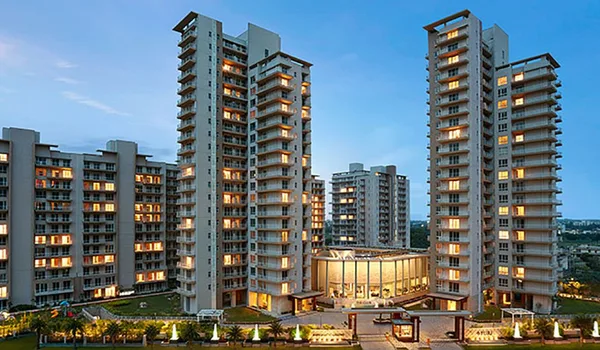
When you buy an apartment on the Dwarka Expressway, the sticker price is only part of the bill. Stamp duty and registration are statutory charges you pay the Haryana government to record the sale in your name, and on a flat priced around ₹1.11 crore — the entry point for a project like Prestige Meadows in Sector 92 — they add several lakh to your upfront cost.
This guide sets out the 2026 stamp duty and registration rates for Gurugram, shows what they work out to on a ₹1.11 crore flat for male, female and joint buyers, and explains how the circle rate decides the amount. These are statutory rates and can be revised, so treat the numbers as a planning guide and confirm the current slab before you register.
What Are Stamp Duty and Registration Charges?
Stamp duty is a tax on the property transaction, charged as a percentage of the property value. Registration is the separate fee for recording the sale deed in the government's records. Paying both is what makes you the legal owner — an unregistered sale is not complete in the eyes of the law.
In Haryana the two charges are levied separately: stamp duty as a percentage that varies by the buyer's gender and where the property sits, and a registration fee that is capped in rupee terms. Both are paid at or before registration, from your own funds rather than the home loan.
Stamp Duty Rates in Gurugram for 2026
Gurugram's developed sectors, including the Dwarka Expressway belt, fall within municipal limits, so the urban rates apply. Haryana charges a lower rate to women to encourage ownership in their name, and a middle rate for joint male-and-female ownership.
| Buyer / Ownership | Within Municipal Limits (Urban) | Outside Municipal Limits (Rural) |
|---|---|---|
| Male | 7% | 5% |
| Female | 5% | 3% |
| Joint (Male + Female) | 6% | 4% |
For most Dwarka Expressway apartments, which sit inside municipal limits, the relevant rates are 7% for a male buyer, 5% for a female buyer and 6% for joint ownership with a woman. Buying in a woman's name, or jointly with one, is the simplest legitimate way to lower the duty.
Registration Charges in Haryana
Unlike stamp duty, the registration fee in Haryana does not rise endlessly with the property value. It is capped, which works in your favour on a higher-value flat.
- Registration fee: capped at ₹50,000 regardless of the property value.
- Pasting fee: a nominal charge, typically around ₹100 per document.
- E-registration / service fee: a small charge, usually in the region of ₹100–300 depending on the deed and platform.
Worked Example: Stamp Duty on a ₹1.11 Cr Flat
Here is what the charges add up to on a ₹1.11 crore flat in urban Gurugram, by ownership type. Stamp duty is the percentage of value; the registration fee is the capped ₹50,000; the total is what you pay the government at registration.
| Ownership | Rate | Stamp Duty | Registration | Total Statutory Cost |
|---|---|---|---|---|
| Male | 7% | ~₹7.77 lakh | ₹50,000 | ~₹8.27 lakh |
| Joint (Male + Female) | 6% | ~₹6.66 lakh | ₹50,000 | ~₹7.16 lakh |
| Female | 5% | ~₹5.55 lakh | ₹50,000 | ~₹6.05 lakh |
The gap is real money: registering in a woman's name rather than a man's saves about ₹2.22 lakh on a ₹1.11 crore flat, and joint ownership sits in between. These figures assume the transaction value equals the circle-rate value; if the circle rate is higher, the duty is calculated on that.
How the Circle Rate Decides Your Duty
Stamp duty in Haryana is charged on the higher of two numbers: the government's circle rate (also called the collector rate) for that locality, or the actual transaction value in your agreement. The circle rate is the minimum value the government assigns to property in an area.
In practice this means you cannot lower your duty by simply under-declaring the price. If you negotiate a deal below the circle rate, the duty is still worked out on the circle rate. When the transaction value is above the circle rate — common for a premium new launch — the duty follows the transaction value. Always check the current circle rate for the sector before you budget.
Other Upfront Costs Beyond Stamp Duty
Stamp duty and registration are the statutory charges, but they are not the only upfront costs on a home purchase. Budget for these alongside your down payment.
- Down payment: the 20–25% of value the loan does not cover — roughly ₹22–28 lakh on a ₹1.11 crore flat.
- GST: an under-construction home may attract GST, while a ready home with its completion or occupation certificate usually does not. Confirm whether it applies to your unit and at what rate.
- Loan processing & legal fees: the lender's processing fee plus legal and technical valuation charges.
- Maintenance & corpus: an advance maintenance deposit and sinking-fund corpus are often collected at possession.
For how the loan and EMI fit around these costs, see the home loan & EMI guide, which works through the borrowing side of the same ₹1.11 crore flat.
How to Pay Stamp Duty in Haryana
Haryana runs property registration through its online system, and the process is straightforward once your paperwork is ready.
- Check the circle rate for the sector and confirm the value on which duty will be charged.
- Buy the e-stamp / pay the duty online through the state's authorised channel for the calculated amount.
- Book an appointment at the relevant Sub-Registrar office via the Haryana registration portal.
- Register the deed in person with both parties and witnesses, carrying the e-stamp, ID proofs and property papers.
You can look up circle rates and registration details on the official Haryana land records and registration portal, jamabandi.nic.in. For a RERA-registered project, also verify the registration on Haryana RERA before you pay.
Tips to Plan for Stamp Duty
- Consider a woman as owner or co-owner to access the lower rate — a legitimate, meaningful saving.
- Budget stamp duty from your own funds, since the loan usually will not cover it.
- Check the circle rate early so the duty does not exceed what you planned for.
- Keep the registration fee cap in mind — at ₹50,000 it is a fixed, predictable line item.
- Confirm the current slab before you register, as state rates are revised periodically.
Frequently Asked Questions
1. What is the stamp duty in Gurugram in 2026?
In Gurugram (within municipal limits), Haryana charges stamp duty of about 7% for a male buyer, 5% for a female buyer and 6% for joint male-and-female ownership. Outside municipal limits the rates are lower, around 5% for men and 3% for women. Rates are set by the Haryana government and can change, so confirm the current slab before you register.
2. How much stamp duty and registration will I pay on a ₹1.11 crore flat?
On a ₹1.11 crore flat in urban Gurugram, stamp duty is roughly ₹7.77 lakh for a male buyer, ₹6.66 lakh for joint ownership and ₹5.55 lakh for a female buyer, plus a registration fee capped at ₹50,000. So the total statutory cost lands near ₹8.27 lakh, ₹7.16 lakh and ₹6.05 lakh respectively. Duty is charged on the higher of the circle rate or the transaction value.
3. Is stamp duty lower for women in Haryana?
Yes. Haryana charges women a lower stamp duty to encourage ownership in their name, about 5% within municipal limits versus 7% for men, and 3% versus 5% outside municipal limits. Buying in a woman's name or in joint names with a woman can reduce the duty you pay.
4. What is the registration charge on property in Gurugram?
Haryana caps the property registration fee at ₹50,000 regardless of the property value, along with small pasting and service fees. This is separate from stamp duty, which is a percentage of the property value.
5. Is stamp duty calculated on the circle rate or the sale price?
Stamp duty in Haryana is charged on the higher of the government circle rate (collector rate) for the area or the actual transaction value in your agreement. If your negotiated price is below the circle rate, the duty is still calculated on the circle rate.
6. Can I add stamp duty to my home loan?
Usually not. Lenders finance a share of the property value, and stamp duty, registration and GST typically have to be paid from your own funds on top of the down payment. Budget for these costs separately so they do not catch you short at registration.
Conclusion
On a ₹1.11 crore Dwarka Expressway flat, stamp duty and registration add roughly ₹6–8.3 lakh depending on whether you register in a woman's, joint or male name — a cost you pay from your own funds, on top of the down payment. Check the circle rate for the sector, pick the ownership structure that suits you, and confirm the live slab before you sign.
When you are ready to line the costs up against a home, start with the current price list, review the floor plans, or book a site visit. For more buyer guides, visit the Prestige Meadows blog.
More from the Blog